
How to Build a Home Bar in Commack Without Overspending
October 31, 2026
You can build a useful home bar in Commack without overspending by buying a few versatile bottles, skipping fancy extras, and planning around the drinks you actually serve. The trick is to start with a tight core, then add only what supports your hosting style.
If you are reading this because the numbers feel slippery, that is normal. Home bars get expensive when people buy for fantasy parties instead of real ones. We hear that from Commack shoppers all the time, especially from folks balancing holiday hosting, steak nights, and casual Suffolk County weekends.
Key Takeaways
- A budget-friendly home bar starts with versatile spirits, not a crowded shelf.
- Vodka, gin, rum, tequila, and whiskey cover most cocktails without forcing you to overbuy.
- The best value comes from buying mixers, bitters, vermouth, and glassware only after you know what you will pour most.
- A smart home bar for Long Island entertaining should also include wine, prosecco, or champagne for dinners and celebrations.
- If you want convenience, a Commack liquor store with online ordering, curbside pickup, or 50-state shipping can simplify the buy list.
What Commack shoppers get wrong about building a home bar on a budget
The biggest mistake is chasing the cheapest bottle on the shelf and calling it value. A real budget plan includes mixers, ice, citrus, glassware, and the fact that you will buy repeats of the bottles you actually use. That is why a smaller, smarter setup usually costs less over time than a big shelf of random labels.
Why the cheapest bottle shelf turns expensive once you factor in mixers, glassware, and repeats
A bottle is only part of the cost. Once you add tonic, soda, vermouth, bitters, garnishes, and proper glassware, the total rises quickly. Many people also discover they do not want to drink the bargain bottle again, which means they replace it instead of finishing it.
Here is the part most homeowners miss: repetition is the real test. If you are going to make vodka sodas, gin and tonics, old fashioneds, and margaritas more than once, then it pays to buy bottles that work across several drinks. That approach keeps your shelf cleaner and your wallet calmer.
A simple way to think about it:
Spend on | Why it matters | What to skip Core spirits | Gives you the most drink options | Novelty bottles you will rarely open Mixers and bitters | Makes the bottle useful | Overpriced cocktail kits with extras you never use Glassware | Improves the pour and presentation | Matching sets you do not need yet Garnishes | Helps drinks taste finished | Too many syrups and flavored add-ins
If you want a deeper starting point, our guide to home bar basics lays out a practical bottle count without the fluff.
Which bar cart basics actually matter for Long Island entertaining and which ones you can skip
For Long Island entertaining, you need function first. A shaker, jigger, strainer, mixing glass, bar spoon, peeler, and a small ice bucket cover most home use. A second coupe set or a decorative decanter can wait until you know your style and your guest count.
Skip the gear that looks impressive but sits untouched. A muddler is useful if you love mojitos or smash-style cocktails. A citrus press helps if you host often. But a built-in bar cart full of specialty tools is not required for a strong setup.
One couple near Route 25A came in with a list that read like a restaurant order guide. After a short conversation, they left with three bottles, a few core tools, and enough mixers to cover dinner parties through the holidays. They spent less, and they used everything they bought.
How a smart mix of vodka, gin, rum, tequila, and whiskey keeps your home bar versatile without overbuying
These five bottles cover the widest range of drinks for the fewest dollars. Vodka disappears into cocktails. Gin brings herbal lift for martinis and lighter serves. Rum handles tropical drinks and easy punches. Tequila gives you margaritas and straight pours. Whiskey anchors old fashioneds, Manhattans, and neat pours. 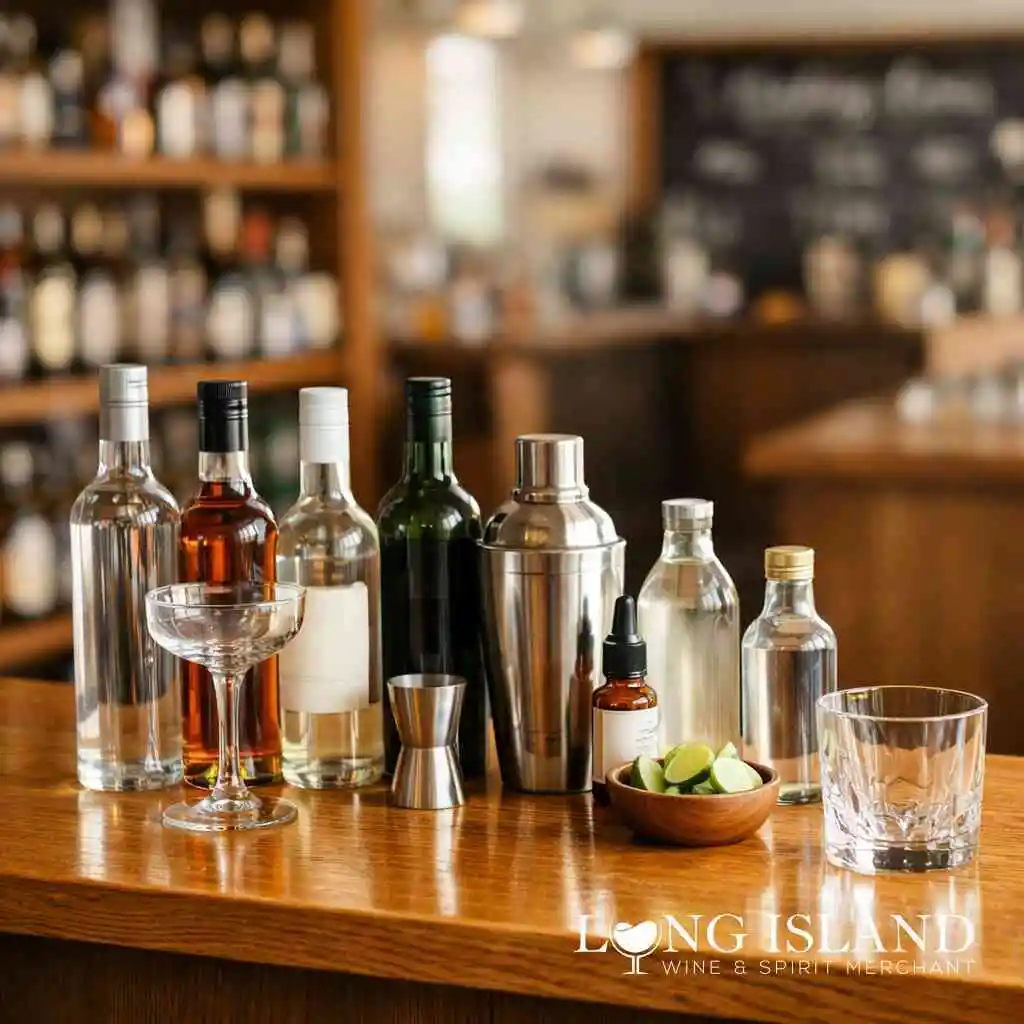
For most homes, one bottle in each category is enough to start. That gives you options without crowding your cabinet. If you entertain on a budget in Commack, that balance matters more than chasing rare labels right away.
A practical starter mix looks like this:
- Vodka for easy mixed drinks.
- Gin for martinis and tonic-based cocktails.
- Rum for summer cocktails and punch.
- Tequila for margaritas and tequila sodas.
- Whiskey for home bar classics and sipping.
If you prefer a guided shopping list, our home bar picks can help you sort the essentials before you buy.
The bottle roadmap that keeps a home bar useful for steak nights, brunches, and holiday hosting
A useful home bar should handle dinner, brunch, and gifts without forcing you to buy twice. Start with one or two reliable bottles in each major category, then add style bottles only after you know what your guests actually ask for. That is how you keep the bar useful and the budget intact. ### How to choose essential home bar bottles from whiskey and bourbon to mezcal, cognac, and single malt scotch
For whiskey, choose by use. If you want cocktails, bourbon usually gives you a rounder, sweeter profile for old fashioneds. If you want something sharper for sipping or highballs, a blended whiskey or a lighter style may fit better. The whiskey vs bourbon difference comes down to mash bill and aging rules, not just taste.
If you are building with depth, add one bottle that broadens the shelf:
- Small-batch bourbon for richer cocktails and neat pours.
- Rare whiskey or limited releases only after your core bottles are covered.
- Single malt scotch for a smoky or malt-forward pour.
- Cognac for sipping or after-dinner drinks.
- Mezcal for smoky cocktails that need more character than tequila alone.
For verified drinking guidance and alcohol-use basics, the NIAAA offers clear public health information. That matters if you are hosting often and want to pour responsibly.
If you like to compare bottle styles, this simple guide helps:
Spirit | Best use | Why it earns a spot Bourbon | Old fashioned, whiskey sour | Rich body and broad appeal Single malt scotch | Sipping | Distinct malt character Mezcal | Smoky cocktails | Adds depth and complexity Cognac | Slow sipping | Smooth after-dinner option Tequila | Margaritas, palomas | Flexible and crowd-friendly
For shoppers who want to browse by category, our whiskey selection is a strong place to compare styles without overbuying.
When wine belongs in the plan with cabernet, pinot noir, chardonnay, sauvignon blanc, rosé, champagne, and prosecco
Wine belongs in the plan the moment you host dinners. Cabernet works well with steak, which is why it often shows up for wine pairing for steak nights. Pinot noir gives you flexibility with poultry, salmon, and mushroom dishes. Chardonnay covers richer appetizers and everyday dinners. Sauvignon blanc handles crisp starters and lighter plates. Rosé is an easy crowd-pleaser. Champagne and prosecco cover celebrations and brunch.
If you are choosing just a few, start with one red, one white, and one sparkling bottle. That covers more occasions than buying three reds and no white. For Long Island gatherings, rosé feels especially natural, and North Fork rosé is still the unofficial drink of many easy, sunlit get-togethers from Huntington to Smithtown.
A local shop that knows the island’s tastes can help you find better value in wine, too. That includes organic wine, biodynamic wine, and natural wine for people who want a cleaner style or a more specific food match. If you want to browse by bottle type, our wine collection makes it easier to sort by occasion.
For celebratory bottles, a well-chosen sparkling wine can do more than a dessert wine ever will. Keep one on hand for unexpected guests, birthday dinners, or a quick toast before everyone heads back over Sunken Meadow Parkway.
What mixers, bitters, vermouth, amaro, and nonalcoholic extras make the whole setup work better
The bottles matter, but mixers make the bar usable. A small setup should include vermouth, bitters, club soda, tonic, lemon, lime, simple syrup, and one amaro if you like a slightly bitter after-dinner pour. Those items make vodka, gin, rum, tequila, and whiskey work harder.
Here is a lean shopping list that keeps your bar flexible:
- Sweet and dry vermouth
- Aromatic bitters
- Citrus juice or fresh citrus
- Tonic and soda water
- Simple syrup
- One amaro
- One nonalcoholic mixer for each base spirit you buy
If you host brunch, prosecco and a citrus mixer go a long way. If you host steak nights, bitters and vermouth matter more. If you host holiday dinners, a bottle of champagne or a seasonal cordial can carry the whole evening.
For readers who want a direct, convenient option, Liquor Store Open is a practical Long Island Liquor Store choice because you can shop online, compare categories, and pick what fits your budget without rushing through a crowded aisle. If you need convenience around Commack, that is a real advantage.
You can also use our liquor store to browse bottles for gifts, cocktails, or dinner hosting, and shipping details if you are ordering beyond Long Island. If you need gifts, the gift page is helpful for baskets, engraved bottles, and holiday-ready sets.
For a little added confidence, the TTB is the federal agency that oversees alcohol labeling and distribution rules in the United States. That is one reason it helps to buy from a store that treats compliance seriously.
If you want to keep your bar cost down, order only what supports the drinks you already make, then add one new bottle at a time. That is how you end up with a home bar that feels complete without feeling bloated. If you want help building the list, start with a quick online order or curbside pickup in Commack and let the shelf grow with your actual habits.
Frequently Asked Questions
Question: How do I start a home bar on a budget in Commack without buying too much?
Answer: The best way to build a home bar on a budget is to start with a small core of versatile bottles and add only what you will actually use. A practical starter setup usually includes vodka for cocktails, gin for martinis and tonic drinks, rum for tropical drinks, tequila for margaritas, and whiskey for classic pours like an old fashioned. From there, you can add bitters and vermouth, simple mixers, and a few glassware essentials instead of filling a shelf with random bottles. If you are shopping through a Commack liquor store or an online liquor store like Liquor Store Open, you can compare options for craft spirits, fine wine, and home entertaining essentials in one place, which makes it easier to stay focused on value rather than impulse buys.
Question: What are the essential home bar bottles I should buy first for Long Island entertaining?
Answer: If you want a home bar that works for steak nights, brunches, and casual Long Island gatherings, focus on essential home bar bottles that cover the most drinks with the fewest purchases. A balanced lineup often includes vodka, gin, rum, tequila, and whiskey, then one or two deeper options like small-batch bourbon, rare whiskey, single malt scotch, cognac, or mezcal depending on your style. For wine-focused hosting, add cabernet for dinner parties, pinot noir for versatile pairing, chardonnay for everyday entertaining, sauvignon blanc for lighter plates, and champagne or prosecco for celebrations. Liquor Store Open can help you choose bottles that fit your party-planning needs, whether you are looking for affordable wedding wine, holiday spirits, or a smart bottle for wine pairing for steak.
Question: Does Liquor Store Open carry mixers, bitters, vermouth, and amaro for a complete cocktail starter kit?
Answer: Yes, that is exactly the kind of support that makes a home bar feel complete. A cocktail starter kit is not just about spirits; it also depends on mixers, bitters and vermouth, amaro, citrus, and nonalcoholic extras that make each bottle more useful. With the right mixology supplies, you can turn vodka into easy highballs, gin into crisp cocktails, rum into summer cocktails, tequila into margaritas, and whiskey into classics without overbuying specialty ingredients. Liquor Store Open is built to make that process simpler, with a selection that can help you shop for Long Island spirits, craft beer for gatherings, and supporting items for home bar basics all in one convenient place.
Question: What is the difference between whiskey vs bourbon, and which one should I buy for a budget-friendly home bar setup?
Answer: The whiskey vs bourbon difference comes down to production rules and flavor profile, and knowing that difference helps you buy smarter. Bourbon is often the better first choice for a home bar because it tends to be rounder and sweeter, which makes it great for old fashioneds and other classic cocktails. If you want a broader whiskey shelf, you can later explore small-batch bourbon, private label whiskies, limited releases, or even a single malt scotch for sipping. Liquor Store Open can guide shoppers who want best scotch under 100, rare whiskey, or a dependable bottle for entertaining without overspending. That way, your bar grows with your actual preferences instead of guesswork.
Question: Can I order home bar essentials from a Commack liquor store with curbside pickup or 50-state shipping?
Answer: Yes, Liquor Store Open is designed for convenience whether you are local to Commack or shopping from farther away. If you want a Commack liquor store experience with the ease of online ordering, curbside pickup, or 50-state shipping, you can browse bottles and build your list before you buy. That is helpful when you are planning holiday spirits, New Year’s champagne, Valentine’s wine, summer cocktails, or even corporate gifts and gift baskets. You can also explore fine wine, organic wine, biodynamic wine, natural wine, rosé, North Fork wines, and Long Island craft distillers without rushing through a crowded store. It is a practical way to shop for a home bar, wedding alcohol, or a thoughtful bottle for guests while keeping your budget under control.


