
The Difference Between Small Batch and Private Label Whiskey
September 6, 2026
Why small batch and private label whiskey are not the same bottle in disguise
You can stand in front of a shelf and feel the confusion quickly. The labels sound polished. The flavor notes sound similar. Yet small batch whiskey and private label whiskey are built for different jobs, and that matters when you want the right bottle for your table, your bar cart, or a gift that feels thoughtful.
If you are reading this because the choices feel muddy, that reaction makes sense. Most shoppers ask the same question, especially when they want rare whiskey without paying for hype. At Liquor Store Open, we help people sort through that blur every day. The key is simple: small batch describes how whiskey is selected, while private label describes who is putting the name on the bottle.
What shoppers usually mean when they ask for a small batch bourbon
Most people mean a bourbon that was chosen from a smaller set of barrels. That sounds simple, but the details matter. A distiller may pull from a limited group because those barrels share a similar profile. The result often feels more focused than a broad house blend. In practice, small batch bourbon usually signals careful selection, not a legal style with a fixed recipe.
Here is the part most shoppers miss. Small batch does not automatically mean better, older, or rarer. It means the producer made a tighter call on which barrels belonged together. That is why you may find a bottle that leans into caramel, baking spice, and oak, while another small batch bottle pushes fruit and vanilla instead. On Long Island, that distinction matters when you are buying for whiskey fans who notice nuance.
How private label whiskey gets its own identity without changing the source spirit
Private label whiskey works differently. The spirit may come from a partner distillery, a contract distilling arrangement, or a bottling program built for a retailer or brand. The liquid can be excellent. The identity, though, comes from branding, blend choices, label design, and the buying company’s specs. That is why private label spirits can feel exclusive even when the source spirit is not a mystery.
One client from near Huntington told us he wanted something “custom” for a family event on Route 25A. He did not need a rare allocation. He needed a bottle that looked intentional and tasted dependable. We walked him through a private label whiskey option that fit the moment, then paired it with a gift box. The bottle was memorable because the presentation matched the occasion.
Why tasting notes can look similar while the backstory is completely different
Two whiskeys can taste close and still come from very different systems. One may be a small batch whiskey chosen for balance inside a distillery’s own house style. The other may be a private label whiskey built from sourced whiskey and designed for a retailer’s audience. Both can show vanilla, oak, and dried fruit. Still, one tells a production story, while the other tells a branding story.
That is why shoppers can get tripped up by marketing language. “Hand-selected” sounds meaningful, but it does not tell you whether the producer changed the mash bill, the barrel mix, or the bottling proof. “Limited release” can also mean very different things depending on the house. If you want a bottle that drinks like a craft whiskey story, ask what actually changed in the process, not just the label copy.
What a Commack liquor store looks for before putting either style on the shelf
A Commack liquor store should care about clarity first. The bottle should explain itself well enough for a first-time buyer and still interest a seasoned bourbon drinker. We look at flavor balance, proof, label honesty, and how the whiskey fits real shopping needs, from party planning to corporate gifts. We also pay attention to how a bottle sits beside fine wine, craft spirits, and the rest of the shelf.
On the projects we’ve finished this year, the biggest mistake is stocking only by hype. That fills a shelf, but it does not help a customer. In a good Long Island Liquor Store, the right bottle should make sense for weekday pours, holiday spirits, and whiskey for gifting. That is especially true when someone wants something polished for a dinner in Suffolk County or a basket headed to a client in Smithtown.
The production choices that quietly shape every sip
The real story starts before the bottle gets a label. Mash bill, barrel choice, blending, and distillery relationships shape the glass more than most front labels admit. That is why two bottles in the same category can taste worlds apart. If you want to understand whiskey production process basics, you have to start there.
Here is what almost no online guide mentions. The producer’s job is not just making whiskey. It is deciding which parts of the whiskey to keep, which to blend, and which to present as the final face of the brand. That is where whiskey sourcing, barrel selection, and whiskey blending become the real decision points.
How mash bill differences steer flavor long before aging begins
The mash bill sets the foundation. More corn usually brings sweetness. Rye can sharpen the profile and add spice. Wheat often softens the edges. Those mash bill differences do more than influence tasting notes; they steer how the whiskey behaves in the barrel. That is why American whiskey can taste gentle, bold, or heavily spiced depending on the grain mix.
You may hear shoppers compare whiskey vs bourbon difference and bourbon vs whiskey difference as if they are the same question. They are related, but not identical. Bourbon must meet specific standards, while whiskey is the broader family. If you are browsing small batch bourbon or single malt scotch, the grain story is part of the purchase. It tells you what kind of backbone the bottle may have.
Why barrel selection matters more than most labels admit
Barrel selection can make or break the final pour. One barrel may lean sweet and round. Another may show more char, pepper, or dried fruit. A skilled blender or picker can shape the final whiskey by choosing barrels with the right age, location in the warehouse, and flavor profile. That is why whiskey tasting notes often reflect warehouse choices as much as distillation.
A shopper in Commack once came in looking for something with enough oak for an old fashioned but not so much heat that it overwhelmed dinner. He expected one answer. Instead, we compared two bottles with similar age statements and different barrel selection stories. One drank softer. The other carried more grip. That small difference mattered more than the label art ever could.
Where contract distilling and distillery partnerships fit into the picture
Contract distilling lets a brand create a whiskey program without owning every step. A distillery may produce spirit to a spec, then another company bottles and brands it. Distillery partnerships can also work in a more collaborative way, where the producer and the brand share decisions on flavor, age, and packaging. This is common in private label spirits and custom whiskey labels.
That setup is not a flaw. It is a model. For some buyers, it opens access to a style they love at a format that suits the occasion. For others, it creates a bottling program with more control over taste and presentation. If you want to compare those models, our guide to distillery partnerships and contract distilling for custom whiskey labels is a useful place to start.
How sourced whiskey, independent bottlers, and bottling programs change the final result
Sourced whiskey is whiskey purchased from another producer and bottled under a different name or program. Independent bottlers do similar work, but often with a collector’s eye or a niche market focus. A bottling program can be simple or highly curated. Each path changes how much of the final product comes from the original distillery versus the bottler’s selection choices.
That is why labels matter. The same spirit can feel more luxurious, more local, or more collector-friendly depending on who bottled it and why. For shoppers who care about collector whiskey or limited releases, the origin story is part of the value. If you want a deep look at bottle selection, compare options through whiskey tasting notes and flavor profile differences for American whiskey. It helps you read the shelf with more confidence.
When the label tells you more than the category on the front
A label can hide a lot, but it also reveals a lot if you know what to read. Brand language, barrel callouts, and release notes can tell you whether a whiskey is meant for exclusivity, everyday sipping, or gift-giving. That is why private label whiskey and small batch whiskey should not be treated as twins. They may share the same glass shape, but they are not built the same way.
This is especially useful for shoppers in Commack and across Suffolk County. People often want a bottle that feels personal without being fussy. Others want a statement piece for a bar cart near Huntington or a dinner near Sunken Meadow. The label often tells you which lane the bottle is trying to serve.
What private label spirits usually signal about exclusivity and branding
Private label spirits usually signal control. A retailer, club, or brand wants something tied to its own identity. That may mean a custom label, a specific flavor target, or a bottle aimed at repeat buyers. The exclusivity is often in the branding and placement, not in a promise that the whiskey is automatically rare.
That can be a strength. A private label bottle may be ideal for a wedding favor, a client thank-you, or a house pour that stays consistent. It can also feel more personal than a mainstream release. When shoppers ask about private label whiskey, sourced whiskey, and whiskey blending in Suffolk County, they are usually asking how much identity comes from the producer versus the brand. That is the right question.
How limited releases and collector whiskey appeal to different buyers
Limited releases and collector whiskey often appeal to different instincts. One buyer wants a bottle with a story and enough scarcity to feel special. Another wants a pour that will open beautifully at the table. The bottle can satisfy both, but not always for the same reason. A rare release may bring conversation, while a well-made daily bottle brings comfort. 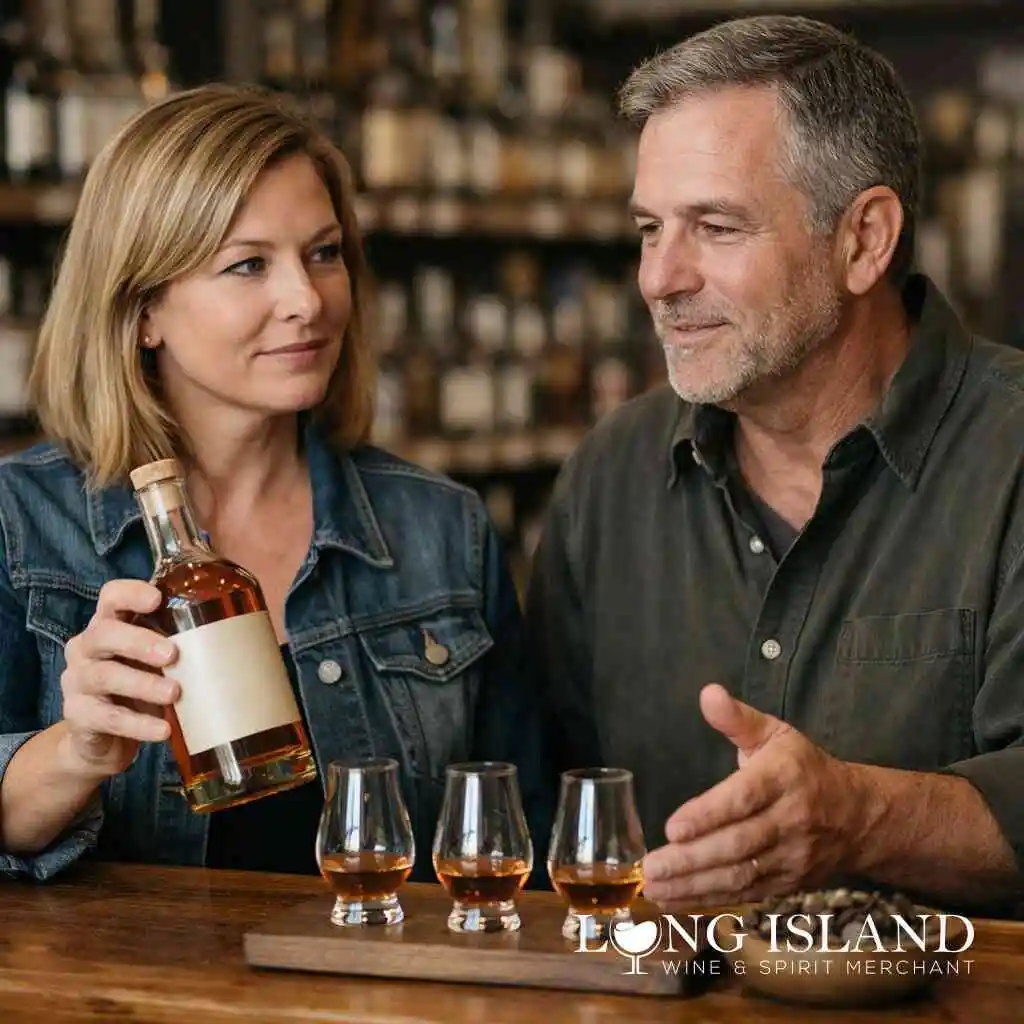
In our experience, shoppers around Long Island ask for rare whiskey most often when they are buying for a milestone or a host. They are not always chasing speculation. Sometimes they just want something people will remember. If that is your goal, craft whiskey, collector whiskey, and limited releases on Long Island can help narrow the field without turning the search into homework.
Why small batch whiskey often leans into craft whiskey language
Small batch whiskey often borrows the language of craft whiskey because both ideas value selection and care. Small batch suggests fewer barrels. Craft suggests attention, hands-on decision-making, and a smaller-scale feel. Neither term guarantees a flavor style, but both help shoppers picture a bottle with intent behind it. That is why these bottles often sell well to people who want something approachable but not bland. A lot of Long Island customers want that middle ground. They want enough character to stand up to grilled food, but not so much edge that the bottle only suits enthusiasts. That is where a small batch bourbon can shine. It gives you a clear house style and enough personality to feel worth opening on a Friday night in Commack. ### What to notice on labels for single barrel whiskey, single malt scotch, and American whiskey
Start with the category. Single barrel whiskey usually means the liquid came from one barrel, not a blend of many. Single malt scotch tells you it is made from malted barley at one distillery in Scotland. American whiskey is broader and can include bourbon, rye, Tennessee whiskey, and more. Those are not cosmetic differences. They tell you how the spirit was made and what flavor range to expect.
A simple label checklist helps:
- Look for barrel calls like single barrel whiskey or small batch.
- Check whether the bottle says bourbon, rye, or single malt scotch.
- Notice proof, age statement, and source language.
- Scan for clues about whiskey sourcing or bottling origin.
- Watch for phrases that suggest a gifting focus or collector focus.
If you want help matching a bottle to an occasion, start with single barrel whiskey, American whiskey, and rare whiskey releases. That category lens often saves more time than reading a dozen tasting cards.
Choosing the right bottle for your table, gift, or bar cart
The right bottle depends on the job. A dinner bottle should complement food. A gift bottle should feel polished. A bar cart bottle should be flexible enough for neat pours and cocktails. That is why the small batch whiskey versus private label whiskey question is really a use-case question in disguise.
If you live near Commack, Smithtown, or along Route 25A, you probably want choices that work for real life. You may need a bottle for steak night, one for holiday spirits, and another for gift baskets. Good guidance saves time and helps the bottle feel intentional.
When small batch bourbon makes more sense than private label whiskey
Choose small batch bourbon when flavor matters more than branding. If you want a whiskey with a clearer producer identity, small batch is often the safer pick. It tends to offer a more recognizable house style, which helps when you are pairing with food or comparing it against premium spirits already on your shelf. That makes it a strong fit for dinner parties and serious whiskey drinkers.
Private label whiskey makes more sense when presentation matters most. Think branded gifts, client baskets, or a house bottle for an event. A customer planning a family celebration near Huntington recently wanted a bottle that would look elegant next to the dessert spread. We steered them toward a private label option with a gift box because the visual story mattered as much as the sip.
How to build a home bar with whiskey, vermouth, bitters, and amaro
A smart home bar does not need forty bottles. It needs a few flexible ones. Start with a solid whiskey, then add vermouth, bitters, and amaro. That gives you enough range for old fashioneds, manhattans, and low-effort after-dinner drinks. If you also keep vodka, gin, and rum nearby, you can cover most casual hosting needs without crowding the cabinet.
A practical core list looks like this:
- One small batch whiskey for sipping and mixing
- One rye or bourbon for cocktails
- Dry and sweet vermouth
- Aromatic bitters
- One bottle of amaro
- Optional add-ons like tequila, mezcal, or cognac for broader mixology
For a more detailed setup, use how to build a home bar with whiskey, vermouth, bitters, and amaro. It is one of the easiest ways to make a home feel ready for company.
Which bottles pair best with steak dinners, holiday spirits, and gifting
For steak, you want structure. A bourbon with enough oak and spice can hold its own beside char and fat. That is why many shoppers ask about wine pairing for steak and then quietly end up reaching for whiskey instead. For holiday gatherings, richer bottles often feel right because they echo the season. Think warm spice, toasted oak, and a finish that lingers without harshness.
Gift bottles should read cleanly. They do not need to be the rarest item in the shop. They need to feel chosen. That is why bottles in the best scotch under 100 range often do well for hosts, while a well-presented bourbon can anchor gift baskets for dads, clients, or colleagues. If you want a curated path, try pairing whiskey for gifting and holiday spirits on Long Island.
How Long Island shoppers use whiskey for gifting, corporate gifts, and holiday baskets
On Long Island, whiskey shows up everywhere once the season starts turning. It appears in corporate gifts, family baskets, and weekend hosting plans. It also plays well with champagne, prosecco, and even North Fork wines when people are building mixed gift sets. A bottle can anchor a basket or stand alone with a simple note.
We see the most interest from shoppers who want something dependable but not dull. They may be organizing wedding alcohol, planning a client thank-you, or putting together a basket with snacks and spirits. When those shoppers want polish without stress, they often ask for a bottle that feels personal and still practical. That is where the balance between private label and small batch really matters.
What to do next when you want the right whiskey without the guesswork
The fastest way to choose well is to compare flavor, purpose, and source before you buy. Ask whether you want a producer story, a brand story, or a gift story. Then match the bottle to the job. That keeps the purchase calm instead of confusing.
If you are shopping with a budget in mind, little details help. A price match, senior discount, or veteran discount can make repeat buying easier. For people who host often, that matters. It keeps the shelf stocked for summer cocktails, Valentine’s wine, and last-minute holiday spirits without turning every order into a project.
How to compare flavor profile differences before you click buy
Read the tasting notes like a map, not a promise. Look for sweet, spicy, smoky, or earthy cues. Then ask what supports them: the mash bill, barrel choice, proof, or source. If the notes mention toasted oak and dried cherry, you already know more than the label tells you at first glance.
A fast comparison method helps:
- Identify the style: bourbon, rye, single malt scotch, or American whiskey.
- Check the production language.
- Match the note profile to your use.
- Decide whether you want craft spirits energy or a smoother crowd-pleaser.
- Compare bottles that fit the same occasion.
For a deeper browse, start with small batch whiskey and private label spirits differences in Commack. It is a good shortcut when you want structure without pressure.
Why price match, senior discount, and veteran discount can matter for repeat buyers
These details do not change the whiskey, but they change the experience. A shopper who buys for a business, family, or club wants value they can trust. That is especially true when the bottle is part of party planning or a recurring gift habit. Savings can make it easier to keep a favorite bottle on hand instead of replacing it with something random.
Here is the honest part. Good service matters more than flashy claims. The best value often comes from getting the right bottle the first time. If a discount helps you do that, it is worth paying attention to.
When to choose online liquor store ordering with 50-state shipping versus local pickup in Commack
Choose online liquor store ordering when convenience matters most or when you need access beyond the island. 50-state shipping can be useful for gifts and out-of-state friends, though shipping rules always depend on the destination. Choose local pickup or curbside pickup when you want speed, flexibility, or a quick stop near Commack. If you are already heading past Sunken Meadow or down toward Smithtown, that can be the easier move.
For local shoppers, Commack New York liquor store delivery and curbside pickup is often the most practical path. It keeps the process close to home and simple.
How to use the Whiskey section, gifts, and shipping pages to land on the bottle that fits the occasion
Start with the occasion, not the aisle. If you need something for a birthday, open the whiskey pages first. If you need a polished present, check gifts. If the bottle is traveling, review shipping details before you finalize anything. That keeps the decision clean and saves back-and-forth later.
For a straightforward next move, browse the online liquor store ordering and 50-state shipping for rare whiskey page, then compare it with the gifts section. You do not have to solve every part at once. Pick the bottle that fits the occasion, and let the rest follow from there.
Frequently Asked Questions
Question: What is the difference between small batch whiskey and private label whiskey in The Difference Between Small Batch and Private Label Whiskey?
Answer: Small batch whiskey usually refers to whiskey selected from a smaller group of barrels, with the producer focusing on a tighter flavor profile and more deliberate barrel selection. Private label whiskey is different because the main identity comes from the brand, retailer, or bottling program putting its name on the bottle, even if the spirit itself may be sourced or produced through distillery partnerships or contract distilling. At Liquor Store Open, we help shoppers compare small-batch bourbon, private label spirits, and other craft spirits so they can choose a bottle that fits the occasion, whether they want rare whiskey for a collector, whiskey for gifting, or a dependable pour for party planning.
Question: Can Liquor Store Open help me choose the right whiskey for gifting, corporate gifts, or holiday spirits?
Answer: Yes. A whiskey gift should feel intentional, whether you are building gift baskets, planning corporate gifts, or picking out holiday spirits for friends and family. We can help you compare small batch whiskey, private label whiskey, and limited releases so you get the right balance of presentation, flavor, and value. If you want something polished for a client, a host, or a holiday dinner, we can also help you pair the bottle with gift boxes and suggestions that fit the moment. Many shoppers also look for fine wine and spirits to round out baskets, and we are happy to guide you through those choices as well.
Question: Do you carry rare whiskey, single barrel whiskey, and single malt scotch for customers in Commack and Suffolk County?
Answer: Liquor Store Open serves Commack, New York on Long Island and offers shipping across all 50 states, so shoppers can browse a wide selection of whiskey styles and other premium spirits from home. Depending on current availability, customers may find rare whiskey, single barrel whiskey, small-batch bourbon, and single malt scotch among our whiskey options. Because inventory can change, the best approach is to check the online liquor store selection directly or reach out for guidance if you are looking for a specific bottle. We also help people across Suffolk County compare whiskey tasting notes, flavor profile differences, and whiskey vs bourbon difference questions before they buy.
Question: How can I build a home bar with whiskey, vermouth, bitters, and amaro?
Answer: A practical home bar starts with a strong whiskey choice, then adds flexible mixers like vermouth, bitters, and amaro. From there, many shoppers add vodka, gin, rum, tequila, mezcal, or cognac to cover more cocktails and summer cocktails year-round. If you are focused on how to build home bar essentials without overbuying, Liquor Store Open can help you choose bottles that work for sipping and mixing. Our customers often ask for mixology supplies and guidance on which craft spirits pair well with old fashioneds, manhattans, and other classics, and we are always happy to help.
Question: Why should I shop with Liquor Store Open instead of just buying any online liquor store?
Answer: Liquor Store Open is more than just an online liquor store. We are part of Long Island Wine & Spirit Merchant, based in Commack, and we focus on helping customers find the right bottle for real-life needs like party planning, wedding alcohol, wine tasting events, affordable wedding wine, and whiskey for gifting. We also offer helpful options such as curbside pickup, Commack NY alcohol delivery where available, 50-state shipping, price match, senior discount, and veteran discount when applicable. Beyond whiskey, shoppers can explore fine wine, organic wine, biodynamic wine, natural wine, rosé, cabernet, pinot noir, chardonnay, sauvignon blanc, champagne, prosecco, beer kegs, craft beer, and more, making it easy to shop one trusted Long Island Liquor Store for many occasions.


