
What Are the Best Sake Pairings for Sushi in Long Island
September 27, 2026
Why the wrong sake can make sushi taste flatter than it should
Sushi night should feel crisp, clean, and a little special. Yet the wrong bottle can make beautiful fish seem tired and one-note. If you are reading this because your last pairing felt off, that frustration makes sense. Most people blame the sushi, but the bottle is often the real problem. The right sake pairing for sushi lifts sweetness, texture, and umami at once.
What Long Island sushi nights are really asking for from the bottle
Long Island dinners often lean fresh and social. You might be hosting friends in Commack, grabbing takeout near Huntington, or setting plates out before a game at Sunken Meadow. In those moments, you do not want a bottle that shouts. You want one that keeps pace with rice, seaweed, and clean fish. That is why the best sake for sushi usually tastes balanced, not flashy.
Here is the part most people miss. Sushi has delicate salt, subtle sweetness, and a soft vinegar edge. A heavy, sugary drink buries those details fast. A well-chosen sake supports them instead. On Long Island, that matters because local sushi spots often serve both simple nigiri and richer specialty rolls in one order. The bottle has to be flexible.
Why dry sake usually beats sweet sake with clean fish and rice
Dry sake usually wins with sushi because it respects the rice. Sweetness can make white fish taste blurry, while a drier profile keeps the palate awake. If you enjoy dry sake for sashimi, you already know the appeal: it tastes clean, calm, and precise. That profile works especially well with tuna, fluke, yellowtail, and salmon. It also helps soy and wasabi stand out without turning harsh.
A lot of readers ask for a shortcut. The easiest rule is this: the cleaner the sushi, the drier the sake should be. That is especially true for a rice wine and sushi pairing built around nigiri. When the fish is pristine, sweetness has less room to hide. Dry sake lets the freshness stay front and center. It feels composed, not busy.
When chilled sake sharpens nigiri while warm sake softens richer rolls
Temperature changes everything. Chilled sake recommendations make sense for nigiri, sashimi, and lighter maki because cold service adds snap. It sharpens aroma and keeps texture tight. Warmer sake can feel rounder and softer, which helps richer rolls with eel, tempura, or mayonnaise-based sauces. Neither style is better in every case. The match depends on what is on your plate.
One couple in Smithtown asked us why one bottle felt elegant with sashimi but dull with spicy tuna. The answer was temperature, not quality. We suggested the same label served chilled for the first round and gently warmed for the second. That small shift changed the whole meal. They kept talking about how the ginger suddenly tasted brighter. That is why sake tasting notes matter before you pour.
How ordering through a Long Island liquor store changes the whole pairing game
A good Long Island liquor store gives you more than a shelf. It gives you choice, context, and a way to compare styles without guessing. At Liquor Store Open, the point is not just to sell a bottle. It is to help you match your sushi order to the right profile. That matters whether you are picking up in Commack, planning ahead for a dinner party, or looking for Commack NY alcohol delivery when the evening gets busy. A thoughtful shop saves you from trial and error.
We see this every week. Someone walks in looking for one bottle, then realizes the meal needs two: a brighter pour for the first platter and a fuller pour for the second. That is where a knowledgeable Commack liquor store earns trust. You do not need to be a sommelier to get it right. You just need a shop that knows what sushi actually asks for.
The sake styles that belong on a sushi board before you pour anything else
Not all sake behaves the same way at the table. The style you choose changes body, aroma, and how the drink meets soy, rice, and seafood. If you want a sake and sushi pairing guide for chilled pours, start with a few core styles and build from there. That keeps the decision simple. It also keeps the meal from feeling overworked.
Junmai sake with sushi when you want body, rice depth, and umami
Junmai sake with sushi is a strong starting point because it brings structure. Junmai usually has a fuller mouthfeel and a clear rice character. That makes it a natural fit for tuna, eel, mushroom-topped rolls, and anything with a deeper soy glaze. It does not need perfume or flash. It needs balance and grip.
Think of Junmai as the table’s anchor. If you are serving many rolls, it keeps the meal grounded. If the sushi leans savory, Junmai can handle it. It also plays nicely with miso soup, edamame, and lightly grilled appetizers. For readers who like umami-rich sake, this is the style to remember first.
Junmai Daiginjo pairing for delicate sashimi and pristine white fish
A Junmai Daiginjo pairing works when the fish is the main event. This style is often polished, fragrant, and very refined. It can feel silky without being sweet. That makes it ideal for sashimi, snapper, sea bass, and other delicate cuts. The best bottles leave space around the fish instead of crowding it.
On the tables we talk through with customers, this is the bottle people buy when they want the meal to feel elegant. Not complicated. Just precise. A chilled Junmai Daiginjo can make a simple plate of sashimi feel like a quiet celebration. That is useful on Long Island, where many sushi nights are about good company more than big ceremony. If you want premium sake for seafood, this is where to look.
Ginjo sake for nigiri when floral lift matters more than weight
Ginjo sake for nigiri is a smart middle ground. It tends to bring floral lift, gentle fruit, and a cleaner finish than fuller styles. That makes it ideal for nigiri, especially when you want aroma without heaviness. It can brighten salmon, scallop, and yellowtail. It also works well with ginger and a touch of wasabi.
Here is what we see most often. People who like white wine for sushi usually connect with Ginjo quickly. It feels graceful and lively. It does not flatten the rice. It also does not dominate the fish. If your sushi order mixes clean fish and a few richer bites, Ginjo gives you flexibility.
Sparkling sake with appetizers when the meal starts with edamame, crab, or tempura
Sparkling sake with appetizers is the easiest way to start the meal on a bright note. The bubbles reset the palate and make salty bites taste fresher. It works especially well with edamame, crab salad, tempura, and crispy starters. The effervescence also helps cut through fried textures. That makes the first few bites feel lively instead of heavy.
StyleBest withWhy it worksJunmaieel, tuna, soy-heavy rollsmore body and umamiJunmai Daiginjosashimi, white fishdelicate aroma, clean finishGinjonigiri, salmon, yellowtailfloral lift, light textureSparkling sakeedamame, crab, tempurabubbles refresh the palateIf you are planning a mixed sushi spread, sparkling sake can set the tone before the main pours. It feels celebratory without needing a holiday. That is why it also works for wedding alcohol planning, corporate gifts, and casual party planning alike. You can keep it chilled, serve it first, and let the meal build from there.
Which sushi rolls and slices call for which bottle on Long Island
Once the bottle styles make sense, the plate becomes easier to read. Different rolls ask for different textures, and the best pairings follow the food, not a rulebook. That is the core of a good sake tasting guide. You are matching weight to weight, brightness to brightness, and sweetness to salt. The best matches feel almost invisible because they fit so naturally. 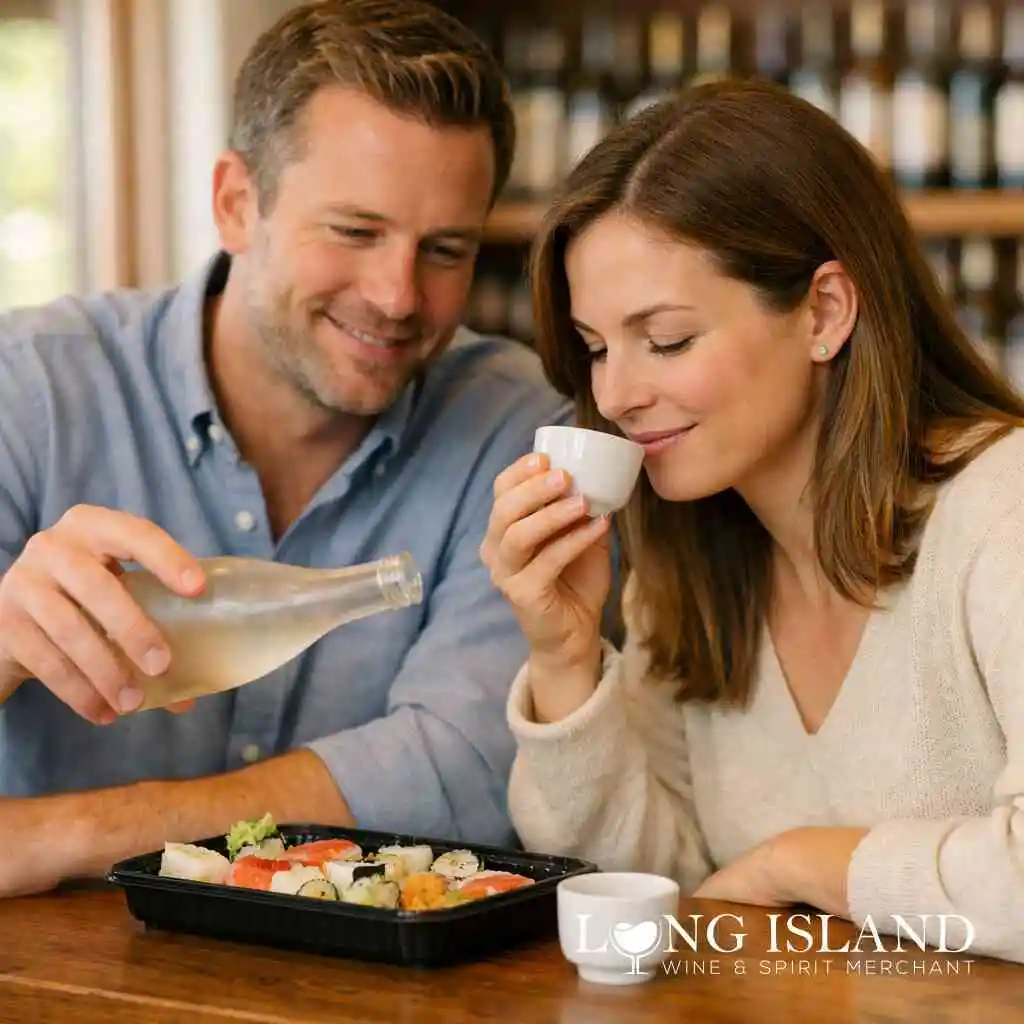
Dry sake for sashimi and other clean cuts that need no distraction
For sashimi, go dry first. Clean slices need room to breathe, and sweetness can get in the way fast. A crisp bottle lets tuna taste meatier and white fish taste more delicate. If you are serving a very simple tray, this is the moment for restraint. The drink should support, not perform.
We hear this from customers who love minimal plates. They want the fish to lead. A dry sake for sashimi and nigiri does exactly that. It keeps the finish clean and avoids adding weight where none is needed. If you like the precision of a good chardonnay with oysters, you will understand the appeal immediately.
Umami-rich sake for tuna, eel, and soy-kissed rolls
Tuna and eel can handle more depth. Soy-glazed rolls, seared fish, and unagi all push the meal toward richer flavors. That is where an umami-rich sake shines. It mirrors savoriness instead of fighting it. The result feels layered and warm.
One client near Route 25A told us their favorite sushi order always came with eel, spicy tuna, and extra soy. Their first bottle kept disappearing behind the sauce. We moved them to a fuller Junmai, and the whole meal opened up. The fish tasted clearer. The rice tasted sweeter. That is the kind of change people notice right away, even if they cannot explain it in technical terms.
Delicate sake flavors for cucumber rolls, yellowtail, and lighter maki
Lighter rolls need a softer touch. Cucumber rolls, avocado maki, and yellowtail do best with delicate aromas and a clean finish. You do not want a bottle that overpowers those subtle flavors. You want something that feels quiet and bright. This is where gentle Ginjo or polished Junmai Daiginjo often wins.
If you are building a spread for guests with different tastes, this style is your safety net. It plays well with both seafood and vegetable rolls. It also pairs nicely with fans of organic wine and natural wine who prefer freshness over intensity. For mixed tables, that flexibility matters. It keeps everyone comfortable.
How spicy tuna, tempura, and soy-heavy bites shift the balance toward brighter rice wine and sushi pairings
Spicy tuna changes the rules. Tempura changes them too. Once chili heat, mayo, or fried batter enters the picture, the sake needs more lift. A brighter bottle can keep the palate awake without getting lost. That is where chilled pours and cleaner acidity help most. They reset the tongue after each bite.
- Spicy tuna likes brightness, not sweetness.
- Tempura likes bubbles or a crisp finish.
- Soy-heavy rolls need enough body to stay present.
- Wasabi asks for a clean, fast finish.
This is also where delicate sake flavors can surprise you. They do not have to be weak. They just have to be precise. If you enjoy sushi night drink pairing as a whole experience, these are the rolls that teach the biggest lesson. Strong food needs a bottle with control, not more volume.
Where Long Island taste lives best from Commack counters to North Fork tables
Taste on Long Island is local, practical, and a little seasonal. People here want bottles that work for weeknight takeout and Saturday gatherings alike. They also want a shop that understands how the island actually drinks. That includes sushi dinners in Commack, holiday gatherings out east, and quieter meals after a drive near the North Fork. A good shop reads those patterns well.
What a Long Island sake selection should look like in a Commack liquor store
A strong Long Island sake selection in a Commack liquor store should cover the basics well. You want at least one dry Junmai, one polished Daiginjo, one versatile Ginjo, and one sparkling bottle for starters. That range gives you room for sashimi, nigiri, rolls, and appetizers. It also helps if the store keeps fine wine, craft spirits, and champagne nearby for mixed occasions. Good stores think in pairings, not isolated bottles.
At Liquor Store Open, that means keeping the focus on what local shoppers actually need. Sometimes you are shopping for sushi. Sometimes you also need gift baskets, corporate gifts, or holiday spirits. The best shops adapt without losing expertise. That is especially helpful if you are also buying prosecco, vodka, gin, rum, or a bottle for a housewarming.
How Suffolk County wine merchant standards help when you are pairing for a dinner party or sushi takeout
A Suffolk County wine merchant earns trust by giving practical guidance, not just labels. That means understanding what works with takeout, what works for dinner parties, and what travels well from store to table. It also means knowing when a customer really needs wine tasting events, and when they just need a bottle that will not clash with salmon. The standard is simple: make the decision easier and the meal better.
Long Island shoppers appreciate that directness. They want clear advice on premium sake for seafood and honest notes on body, finish, and aroma. They also ask for help across categories, from cabernet and pinot noir to sauvignon blanc and rosé. A good merchant can move comfortably between sushi and steak, between wine pairing for steak and a lighter night of maki. That breadth matters.
Why North Fork wines, local tastes, and seasonal Long Island gatherings shape what people actually buy
Local tastes shape what leaves the shelf. North Fork wines remain a strong point of pride, especially around summer dinners and Hamptons gatherings. At the same time, many shoppers reach for sake when they want something cleaner than red wine and more interesting than beer. Long Island’s mix of tastes is broad. That is why a local distillery mindset and a wine-shop mindset both matter here.
We see the same pattern every season. People who buy North Fork wines in warm weather often switch to sake for sushi nights. They want something chilled, precise, and food-friendly. That same customer may later ask about small-batch bourbon, single malt scotch, or rare whiskey for a different occasion. Good retail service keeps all of that straight without making the shopper feel rushed.
When online liquor store convenience, 50-state shipping, curbside pickup, and Commack NY alcohol delivery matter most
Convenience matters when dinner plans change. That is where an online liquor store becomes useful, especially for shoppers who want to compare styles before they commit. If you are staying in, hosting guests, or planning ahead for the weekend, 50-state shipping can widen your options. And if you are close by, curbside pickup at a Long Island liquor store saves time without losing the personal touch. Both paths help when the sushi is already on the way.
For local shoppers, Commack NY alcohol delivery for sushi night pairings can make life easier when the evening gets full. For travelers or gift buyers, shipping matters just as much. The point is simple: good sake should be accessible when you need it. If you want help narrowing the choices, start with the best sake pairings for sushi in Long Island and build from there. And if you want more pairing ideas, the sake and sushi pairing guide for chilled pours offers a useful next layer.
You do not need to overthink sushi night. Pick a dry bottle for clean fish, a fuller one for richer rolls, and a sparkling option for the opener. If you want help choosing the right mix for your table, order online, pick up in Commack, or ask for guidance before your next takeout run. The right bottle will make the meal feel calmer, brighter, and more complete.
Frequently Asked Questions
Question: What are the best sake pairings for sushi in Long Island, and how can Liquor Store Open help me choose?
Answer: The best sake pairing for sushi usually starts with the style of fish and roll you are serving. For clean nigiri and sashimi, a dry sake for sashimi or a polished Junmai Daiginjo pairing usually works beautifully. For richer rolls like eel, spicy tuna, or soy-heavy bites, Junmai sake with sushi often brings the body and umami that make the meal feel more complete. At Liquor Store Open, we help shoppers choose bottles based on the actual meal, not just the label. If you are comparing a few options for a sushi night drink pairing, our Long Island liquor store and online liquor store options make it easy to find a bottle that fits your table. We also offer helpful guidance for curbside pickup, Commack NY alcohol delivery, and 50-state shipping when you want convenience without losing the personal touch.
Question: What makes dry sake and chilled sake recommendations such a good match for sashimi and nigiri?
Answer: Dry sake for sashimi works well because it respects the delicate flavor of the fish instead of covering it up. Chilled sake recommendations are especially useful for nigiri, white fish, and lighter maki because the cold service keeps the finish crisp and refreshing. If you enjoy delicate sake flavors, this style lets the rice, vinegar, and seafood stay balanced. Ginjo sake for nigiri is often a smart choice when you want a little floral lift without adding weight, while Junmai Daiginjo pairing is ideal when you want the meal to feel elegant and clean. Our team at Liquor Store Open can help you narrow down the best sake for sushi based on your menu, whether you are hosting a quiet dinner or planning a larger Long Island gathering.
Question: How do I choose a Long Island sake selection for a sushi dinner party or party planning event?
Answer: A strong Long Island sake selection should give you a few different styles so you can match the whole meal. We usually recommend having at least one dry bottle for sashimi, one fuller Junmai sake with sushi for richer rolls, one Ginjo for nigiri, and one sparkling sake with appetizers to start the night. That kind of mix works well for party planning, wedding alcohol, corporate gifts, and even casual takeout dinners. At Liquor Store Open, we understand how to pair sake with sushi while also helping customers shop across categories like fine wine, craft spirits, champagne, prosecco, organic wine, natural wine, and holiday spirits. If you are building a broader spread, we can also help with gift baskets, wine tasting events, and other entertaining needs.
Question: Why should I buy sake from a Commack liquor store instead of guessing online?
Answer: Buying from a Commack liquor store with real product guidance can save you from choosing a sake that looks good on paper but misses the meal. A knowledgeable Suffolk County wine merchant understands how to match premium sake for seafood, dry sake for sashimi, and umami-rich sake with the right rolls. That matters when you want the bottle to complement the sushi instead of overpowering it. Liquor Store Open combines the convenience of an online liquor store with the support of a trusted Long Island liquor store, so you can shop with more confidence. We also make it easier to browse related categories like cabernet, pinot noir, chardonnay, sauvignon blanc, vodka, gin, rum, cognac, tequila, mezcal, and rare whiskey when your event calls for more than one bottle.
Question: Does Liquor Store Open only help with sake, or can you also assist with other drinks for Long Island sushi nights and celebrations?
Answer: Liquor Store Open can help with much more than sake. Many customers come to us for Long Island spirits, craft beer, beer kegs, summer cocktails, mixology supplies, bitters, vermouth, and amaro, as well as special-occasion bottles like New Year’s champagne, Valentine’s wine, and affordable wedding wine. If you are building a home bar, comparing whiskey vs bourbon difference, or shopping for small-batch bourbon, single malt scotch, cognac, or private label whiskies, we can help you explore options in a way that still feels approachable. We also support shoppers looking for local distillery selections, North Fork wines, Long Island craft distillers, limited releases, and best scotch under 100 guidance when available. Whether you need curbside pickup, Commack NY alcohol delivery, or 50-state shipping, our goal is to make the experience easy, warm, and useful.


